
In modern cloud environments, sensitive data is spread across countless databases, object stores, analytics pipelines, and SaaS integrations. Permissions change constantly. Configurations are unique to each platform. New identities—human, service, and now AI agents—are added every day. Manual remediation simply doesn’t scale.
DSPM can help to reduce the blast radius in cloud environments, but without automation, DSPM quickly becomes just another source of alerts and tickets.
In this post, we’ll delve into the challenges of securing data in the cloud, explain why automation is crucial to overcoming those challenges, and share what an automated DSPM approach should look like.
One misconfiguration puts millions of identities at risk
Even one security lapse in cloud environments puts your sensitive data at risk.
In one real-world example, a healthcare company using AWS mistakenly exposed millions of clinical records after changing a security rule. A PostgreSQL database was left publicly accessible, putting highly sensitive data at risk of theft, fraud, and regulatory violations.
When one misstep can be catastrophic and expose millions of records, security teams need to be vigilant about securing their cloud data. But vigilance alone isn’t enough—especially when environments are constantly changing.
The flexibility of the cloud breeds risk
IaaS providers like AWS, Microsoft Azure, and Google Cloud provide organizations with tremendous flexibility, but that flexibility comes with risk.
- Exposed and over-permissioned data is a prime target for attackers
- Misconfigured databases can be breached in hours
- In recent years, the majority of breaches have involved cloud data
Increasingly, organizations are multi-cloud with large, sometimes outsourced, development teams constantly spinning up resources. The proliferation of databases, object storage, and now AI training pipelines contributes to the data sprawl.
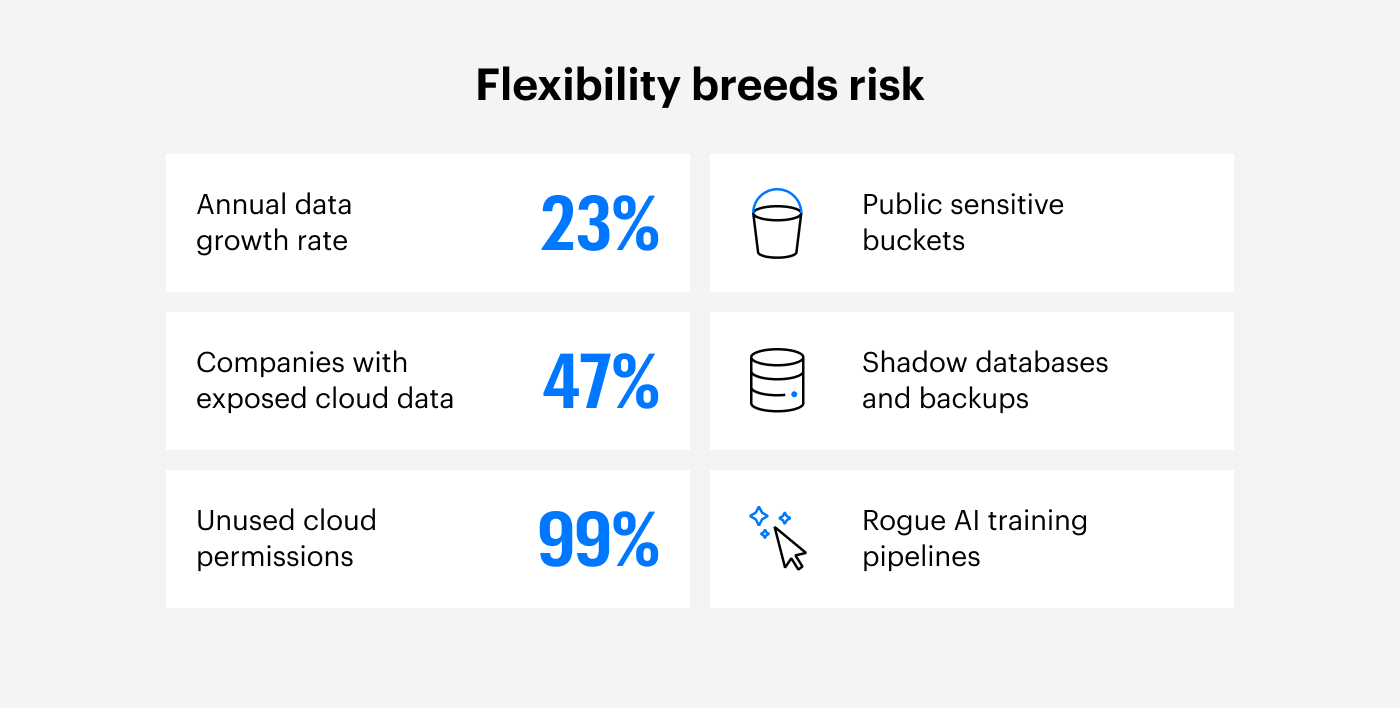
The flexibility of the cloud creates the risk of a data breach.
The result? A sprawling blast radius fueled by misconfigurations and excessive access, hidden data in shadow databases and orphaned test buckets, and third-party integrations that create paths for exposure.
AI compounds the problem. A bad actor or malicious insider using a copilot or AI agent doesn’t need to understand how to access sensitive data. They simply ask, and if they are over-permissioned or data isn’t properly secured, AI will surface it.
Securing data in the cloud requires automation
Without automation, IT and security teams fall behind.
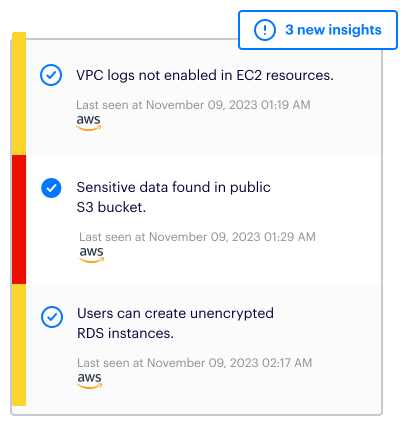
Without automation, IT and security teams fall behind.
As cloud risk grows, many security teams turn to DSPM solutions hoping to regain control. But most solutions stop short of delivering real protection.
- Discovery-only tools find sensitive data but provide little insight and control over exposure.
- Infrastructure-focused tools analyze buckets and container configurations but lack context about the data.
- Passive DSPM tools provide limited visibility and understanding of exposure, but leave remediation to manual workflows.
The result is a long list of findings, endless tickets, and mounting frustration. As one CISO said about their experience with a passive DSPM solution, “I started with one problem and ended up with 50,000.”
What is automated DSPM?
Automated DSPM combines deep visibility with continuous action. Rather than just surface problems, automated DSPM remediates issues and detects threats automatically. Automated DSPM requires three elements:
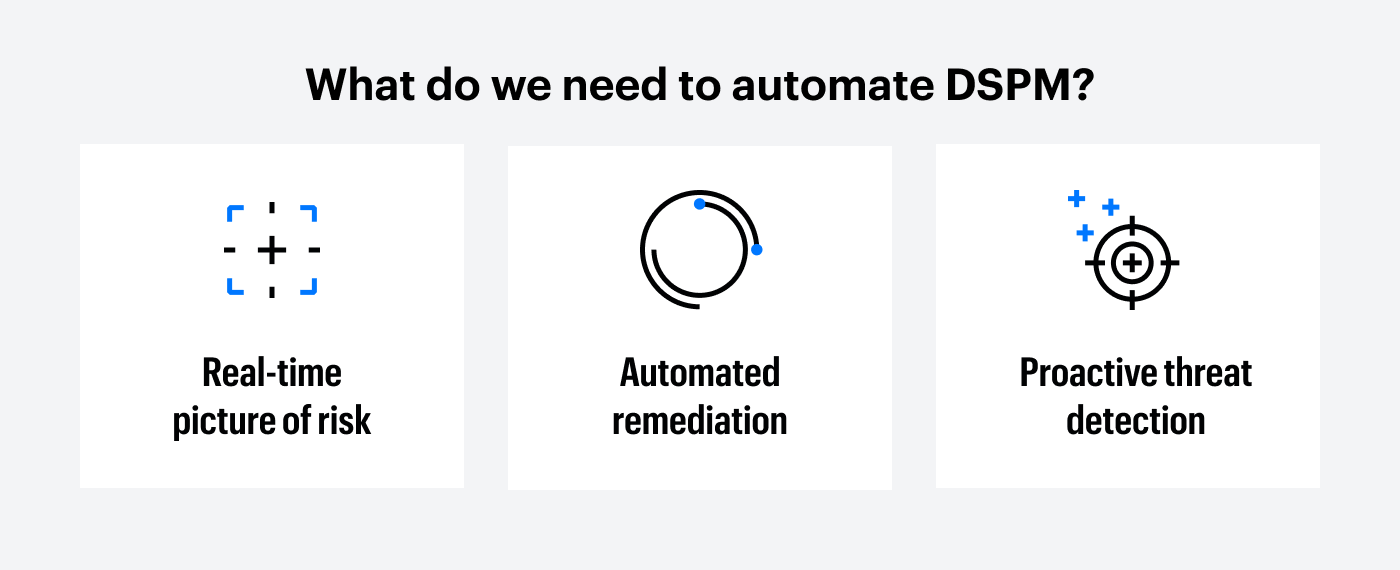
Automated DSPM requires three sets of capabilities.
Complete, real-time visibility
Automated DSPM continuously scans your environment to understand where you have sensitive data, who has permission to access the data, and whether the data is at risk. This provides an audit log of how and by whom data is being used.
To stop data breaches, this visibility must be real-time. Cloud environments change fast, and exposure doesn’t take long to become a breach. Relying on sampling or periodic scans will leave your data open to an attack.
Automated remediation
Visibility without action is meaningless. Once exposure is identified, automated DSPM must be able to fix issues immediately and close vulnerabilities before they are exploited. This includes revoking excessive access, enforcing encryption, and fixing misconfigurations.
Proactive threat detection
Even with strong preventative controls, threats still happen. Most data breaches – 86% –involve stolen credentials. With legitimate credentials, a bad actor is difficult to stop. User entity behavior analytics is critical for detecting abnormal or suspicious activity, identifying insider threats and credential abuse, and responding to attacks in real-time.
Secure your cloud data
For cloud-first organizations, automated DSPM is the difference between understanding risk and controlling it. Varonis leads the DSPM market on Gartner Peer Insights and is the only solution that automatically remediates risk, enforces policies, and detects threats in real time.
Ready to take action? Our free Data Risk Assessment takes minutes to set up and delivers immediate value. In less than 24 hours, you’ll have a risk-based view of the data that matters most and a clear path to automated data security.

-1.png)


.png)

.png)