
Most Salesforce environments already struggle with over-permissioned users. Agentforce agents inherit those same risks and operate at machine speed. When an Agentforce agent is over-permissioned, the issue is not if sensitive data will be exposed but how quickly. Understanding and controlling that access is now critical to keeping data secure.
The challenge of Salesforce Agentforce security
Unlike human users, AI agents don’t let excessive access go unused. AI agents process and analyze every piece of data they can access. When an AI agent is over-permissioned, sensitive data exposure is a virtual certainty.
To prevent overexposure, organizations need complete visibility into the data AI agents can access and how they access it. However, AI agents don’t just access and edit data; they can also take actions like emailing customers or prospects, granting return requests, granting system permissions to other users and agents, and much more.
Organizations must have full visibility and control over the data AI agents can access and edit and over the actions AI agents can take within Salesforce and other enterprise systems. That’s why identity protection for AI agents is essential for organizations embracing Agentforce.
Risks of over-permissioned Salesforce AgentForce agents
AI agents inherit whatever access they are given. When those permissions are broad, the agent becomes a fast and often opaque pathway into sensitive data. Over-permissioning does not only increase the chance of mistakes. It also increases the impact of every misconfiguration, outdated entitlement, or overlooked data store the agent can reach.
Prompt injection
A crafted or ambiguous input can push an agent outside its intended role. If that agent can reach sensitive files or regulated data, it may retrieve and expose information it was never meant to handle.
ForcedLeak is a pretty stunning example of a prompt-injection attack on Agentforce. An attacker submitted a crafted text field through a normal lead form, and the hidden instructions were processed as valid. With excessive access, the agent pulled sensitive CRM data and sent it outside the organization. The case shows how a single injected prompt can turn broad permissions into instant data exposure.
Hallucinated data exposure
An agent that can query large, unfiltered repositories may combine or reconstruct details in ways that reveal PII or confidential content. These exposures are often unintentional. They occur because the agent was allowed to see more than it needed.
Privilege escalation through automation
If an agent can perform actions that exceed the user’s own rights, it can unintentionally bypass granular permission controls. The agent becomes a new access path that the organization did not design or review.
The underlying issue is limited visibility. Many organizations do not know which sensitive datasets an agent can touch or how far its effective blast radius extends. Reducing risk requires clear insight into an agent’s real access, strict enforcement of least privilege, and continuous removal of unnecessary permissions. When agents have only the rights they need, small errors are contained and exposures are far less likely.
Lifecycle security for AI agents
AI agents behave like long-lived identities. Their access, behavior, and impact change as prompts, workflows, and data sources evolve. Securing them requires a lifecycle model rather than a one-time setup.
The first step is visibility. Before deploying an agent, organizations need to understand what sensitive data it can reach and whether those permissions are necessary. Mapping the agent’s access surface and classifying the data involved help prevent unintentional exposure.
The second step is least-privilege enforcement. Agents often accumulate access over time as responsibilities expand. Without regular review and automated remediation, they can become over-entitled. Keeping an agent’s permissions aligned with its actual function reduces the risk of accidental or indirect data exposure.
Continuous monitoring and governance
Once an agent is active, it must be continuously monitored. Agents operate at high speed and with little human oversight. Establishing normal activity patterns and detecting unusual data access helps identify both malicious manipulation and simple misconfiguration before they cause harm.
Effective lifecycle management also requires ongoing governance. As prompts change or new data sources are added, access must be reviewed again and corrected when necessary. When an agent is retired, its tokens and permissions should be removed so that no lingering identity remains.
A lifecycle approach ensures that AI agents stay tightly scoped, continuously right-sized, and aligned with the organization’s data-security posture.
Least agency in the age of AI
The principle of least privilege is well-known in security: Users should only have access to the data they need. When it comes to AI agents, least privilege alone isn’t enough.
Since AI agents access data and perform actions within Salesforce and other enterprise systems, organizations must also implement the principle of “least agency.”
Every agent must only be able to take the actions needed to perform its intended tasks. For example, you don’t want a reporting agent exporting sensitive customer lists, or a support agent outputting confidential information. You also may want to have policies in place for which decisions a support agent can make independently, and which decisions should require explicit human approval. For example, a support agent may be authorized to update a delivery address and issue refunds under $25 on its own, but should require explicit approvals for more significant order changes and larger refund amounts.
When describing their framework for agentic AI guardrails for information security, Forrester states:
Achieving least agency cannot be achieved with manual access controls since AI agents are too dynamic, and their permissions can grow very fast, compounding their risk. To implement least agency, you need continuous, automated enforcement that not only monitors but also prevents agents from taking actions outside of their intended scope.
Least agency is built into Varonis AI Identity Protection for Agentforce, allowing organizations to right-size what agents can do, prevent privilege misuse before it happens, and keep your Salesforce data safe no matter how fast your environment evolves.
Inventory every AI agent with Varonis
With Varonis AI Identity Protection for Agentforce, organizations can:
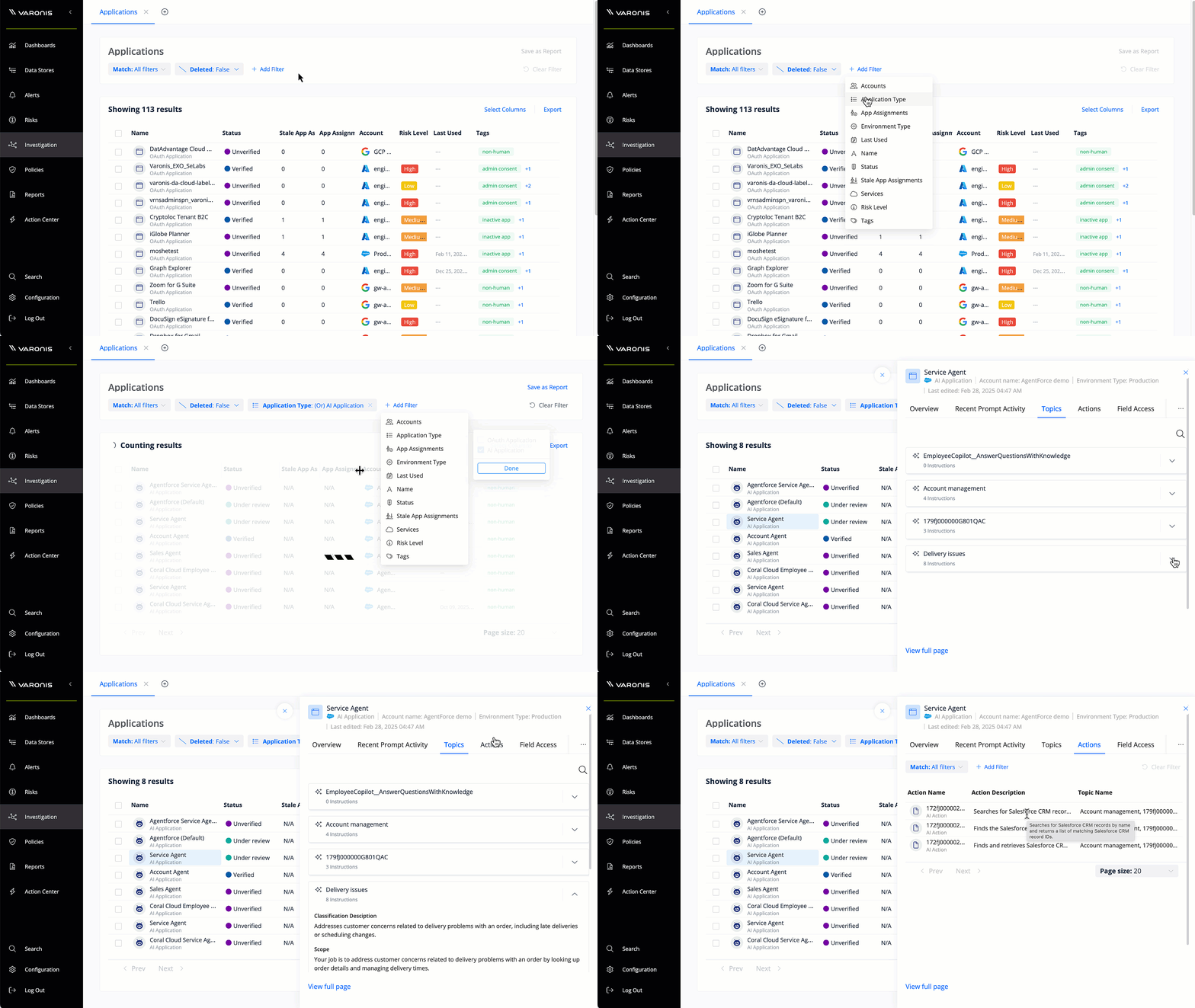
- Inventory every AI agent: Automatically discover and catalog Agentforce agents, including their topics, actions, and deployment status
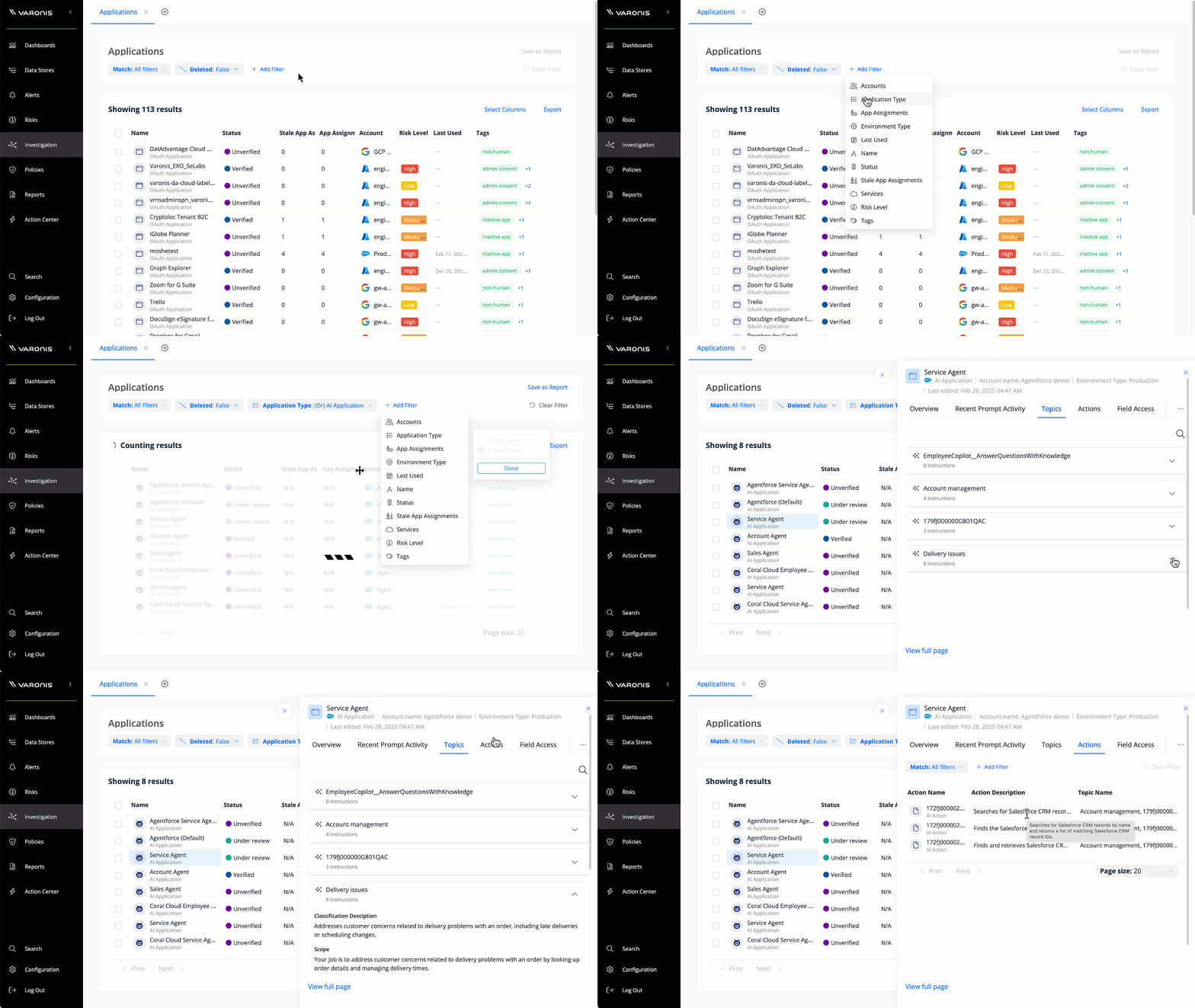
- Unify visibility into data sensitivity, permissions, and activity: Get a unified view into what data is sensitive, which agents can access sensitive data, and what actions have been taken on that data
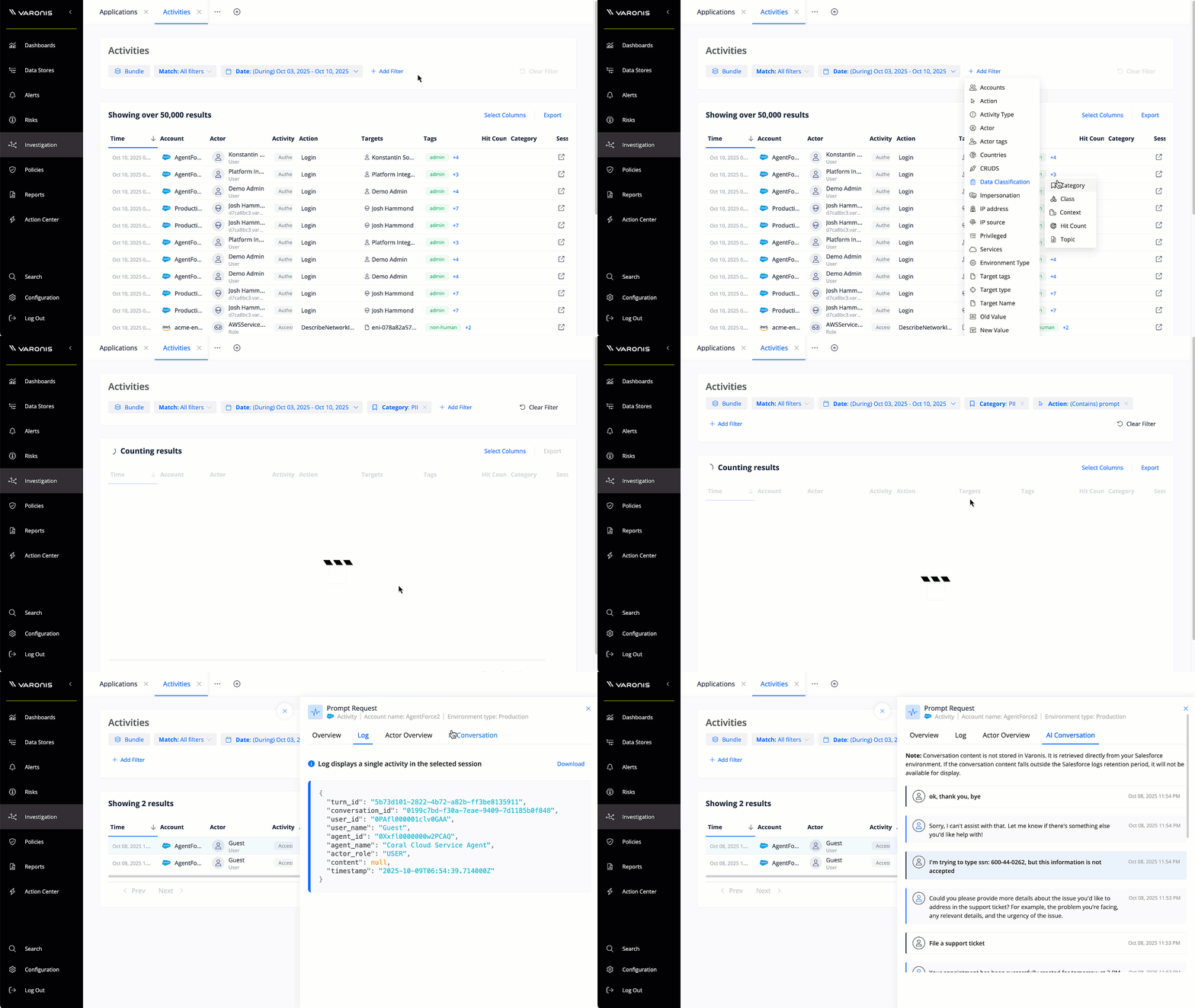
- Automatically enforce least privilege and least agency: Varonis analyzes prompts for sensitive data exposure and policy violations and automatically right-sizes access — ensuring that agents only act within their intended scope
Ready to try Varonis AI Identity Protection for Agentforce?
AI agents demand a new approach to identity security. Varonis AI Identity Protection for Agentforce gives you the visibility and control to safely deploy and operate AI agents, accelerate innovation, and keep your Salesforce data secure.
Start with a free Varonis Data Risk Assessment for Salesforce so you can optimize and maintain your security posture and enforce least agency from day one.
FAQs about Salesforce Agentforce security
What security risks are associated with Salesforce Agentforce?
Unlike human users, these automated agents utilize every privilege available to them. Over-permissioned agents can inadvertently expose sensitive records or perform unauthorized tasks such as exporting confidential customer lists. Organizations must secure these agents to prevent data exfiltration and ensure that automated workflows do not violate internal security policies or compliance regulations.
What is the principle of least agency in AI security?
While the traditional principle of least privilege limits data access, least agency focuses on restricting the specific actions and decisions an AI agent is authorized to execute. This ensures that agents operate strictly within their intended scope. For example, it may permit an agent to update shipping details while requiring human approval for issuing high-value refunds. Implementing least agency is essential for containing the autonomy of AI tools and preventing them from making high-impact decisions that could jeopardize business operations.
How can organizations monitor AI agent activity in Salesforce?
IT and security teams utilize identity protection solutions that automatically discover and inventory every agent, including their specific topics and actions. These tools provide a unified view that correlates agent identities with data sensitivity and permissions. Administrators are allowed to see exactly which agents are accessing confidential information. Continuous monitoring of these activities helps organizations detect anomalies and ensure that agents are not accessing data or performing actions outside their designated roles.
Why is automated enforcement necessary for securing AI agents?
Agents are dynamic and their permission requirements can evolve rapidly, compounding risk over time. Manual access controls aren’t up to the job. Automated enforcement mechanisms analyze prompts and responses in real-time to detect sensitive data exposure or policy violations before they result in a security incident. By automatically right-sizing access and intervening when policies are breached, organizations can maintain a secure Salesforce environment without hindering the operational speed and efficiency of their AI deployments.





.png)