
Phishing has evolved into a sophisticated, multi-channel threat that continues to challenge organizations and individuals worldwide. Phishing attacks now exploit messaging apps, collaboration platforms, mobile devices, and phone calls. They leverage human trust and new technologies to bypass traditional defenses.
This article explores the most prevalent types of phishing, reviews the latest statistics on the threat landscape, and outlines proven prevention measures. You'll learn how to protect your organization from modern phishing techniques across all communication channels.
Types of phishing attacks
Phishing initially revolved around emails with malicious links or harmful attachments. Attackers have broadened their scope, employing techniques adapted to today's communication tools. Understanding the primary forms of phishing is essential for developing effective defenses.
Email phishing
Email phishing remains the most common type of phishing attack. Attackers send bulk emails impersonating trusted organizations or individuals. They prompt recipients to click fraudulent links or supply sensitive details. The messages often create a false sense of urgency, such as warnings about account suspensions or security breaches.
Spear phishing
Spear phishing is a highly targeted variant. Unlike standard phishing, it relies on information about the victim gleaned from data breaches, social media, or public records. This approach increases the likelihood of fooling the target. The communication often references real people, projects, or business circumstances. For example, an employee might receive a convincing email from their HR department requesting credential verification to finalize payroll changes.
Smishing
Smishing (SMS phishing) uses text messages to deceive. Common smishing messages mimic banks, delivery services, or government agencies. They entice users to click on malicious links, call fraudulent numbers, or reply with verification codes. Attackers frequently use leaked phone numbers and personalize their attacks to increase effectiveness.
Vishing
Vishing (voice phishing) attacks are conducted by phone. Criminals impersonate legitimate organizations, such as banks or IT support teams. They manipulate victims into providing passwords, one-time passcodes, or other confidential information. Attackers increasingly employ robocall systems and voice-cloning technology to improve credibility. An unsuspecting employee might receive a call from a "company help desk" asking them to confirm their multi-factor authentication code to resolve an "account issue."
Tool-based phishing
Phishing via collaboration tools and messaging apps has surged with wider adoption of platforms like Microsoft Teams, Slack, WhatsApp, and Zoom. Attackers may send malicious links or files within chat messages. They exploit QR codes that direct users to counterfeit login pages or pose as trusted internal contacts. These messages are harder to filter than traditional email-based threats and can bypass standard email security solutions.
Credential phishing
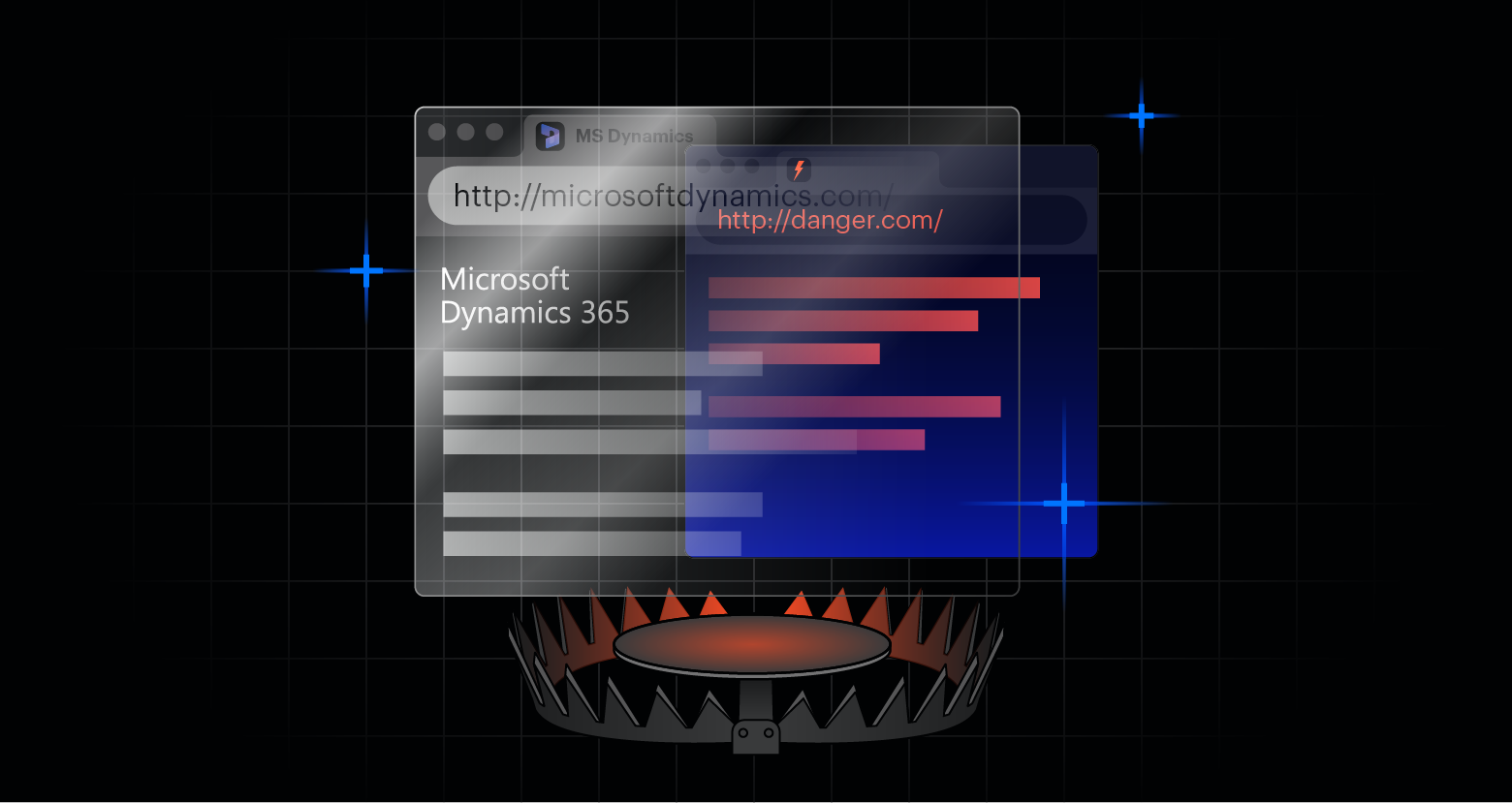
Credential phishing specifically targets login information. Attackers create convincing fake webpages that mimic legitimate login portals—such as those from Microsoft, Google, or enterprise applications. When victims enter their credentials, attackers harvest them for further attacks or financial gain. These campaigns can be delivered across any of the channels described above.
Obfuscated phishing
Obfuscated phishing refers to technical tricks to evade detection by security tools. Attackers manipulate text, embed hidden messages, or use complex coding schemes to conceal their true intent. They hide from both users and automated scanning tools.
Phishing attack statistics
The prevalence and impact of phishing have reached unprecedented levels. Recent industry reports and independent research underscore the severity and scope of the threat.
- Global rise: Phishing continues to be one of the most common attack vectors. AI contributes to a 202% increase in email attack volumes, and makes attacks more sophisticated and harder for companies to detect.
- Multi-channel expansion: Phishing is no longer an email-only threat. Studies indicate more than one-third of phishing attacks now occur via messaging apps, SMS, and collaboration tools. The rise of remote work and proliferation of digital platforms have fueled this expansion.
- Credential compromise: The majority of successful data breaches originate with stolen credentials. Credential phishing was the root cause behind several high-profile incidents, including recent ransomware cases where attackers gained access via compromised usernames and passwords.
- Evolution of tactics: Spear phishing is on the rise, with attackers increasingly relying on information from leaked databases or social media. Deepfake technology and automated voice bots are making vishing attacks far more convincing.
- Financial impact: Business Email Compromise (BEC) — a specialized form of spear phishing— costs organizations billions annually through fraud and unauthorized transfers. A single, well-crafted phishing campaign can result in losses in the tens of millions of dollars.
- Detection and response: Despite the deployment of security solutions, nearly one in seven organizations report that at least one user falls for a phishing attempt each year. The speed with which attackers exploit stolen credentials can render traditional incident response measures less effective unless there are robust preventative controls in place.
Preventing phishing attacks
The evolving nature of phishing necessitates a multi-layered defense strategy. This strategy blends advanced technology, continual user education, and proactive incident response.
Integrated multi-channel security
Relying solely on email filtering is no longer sufficient. Organizations require security solutions that protect across email, mobile devices, messaging apps, browsers, and collaboration platforms. Advanced AI and machine learning-powered defenses can analyze message content, context, and user behavior to detect zero-hour phishing threats—including those that lack obvious malicious indicators.
Credential protection and access controls
Enforce strong authentication protocols, such as multi-factor authentication (MFA), to mitigate the impact of stolen credentials. Monitor for social engineering attempts to bypass MFA—especially through vishing. Automated detection of credential phishing attempts and live scanning of suspicious links in real time can limit exposure.
User awareness training
Regularly train employees to recognize the latest phishing tactics across all communication channels. Simulated phishing exercises and mandatory awareness modules empower users to spot and report suspicious interactions. This applies to interactions received by email, SMS, or collaboration apps.
Incident response preparation
Develop and enforce clear procedures for reporting and handling suspected phishing incidents. Consider monitoring for credential leaks and suspicious login attempts. Maintain visibility into the use of collaboration and messaging platforms.
Technical controls and obfuscation detection
Advanced security platforms can identify obfuscated phishing attempts that might bypass conventional scanners. This involves AI-driven tools trained to recognize hidden malicious content, unnatural message formatting, or visual anomalies in login pages and attachments.
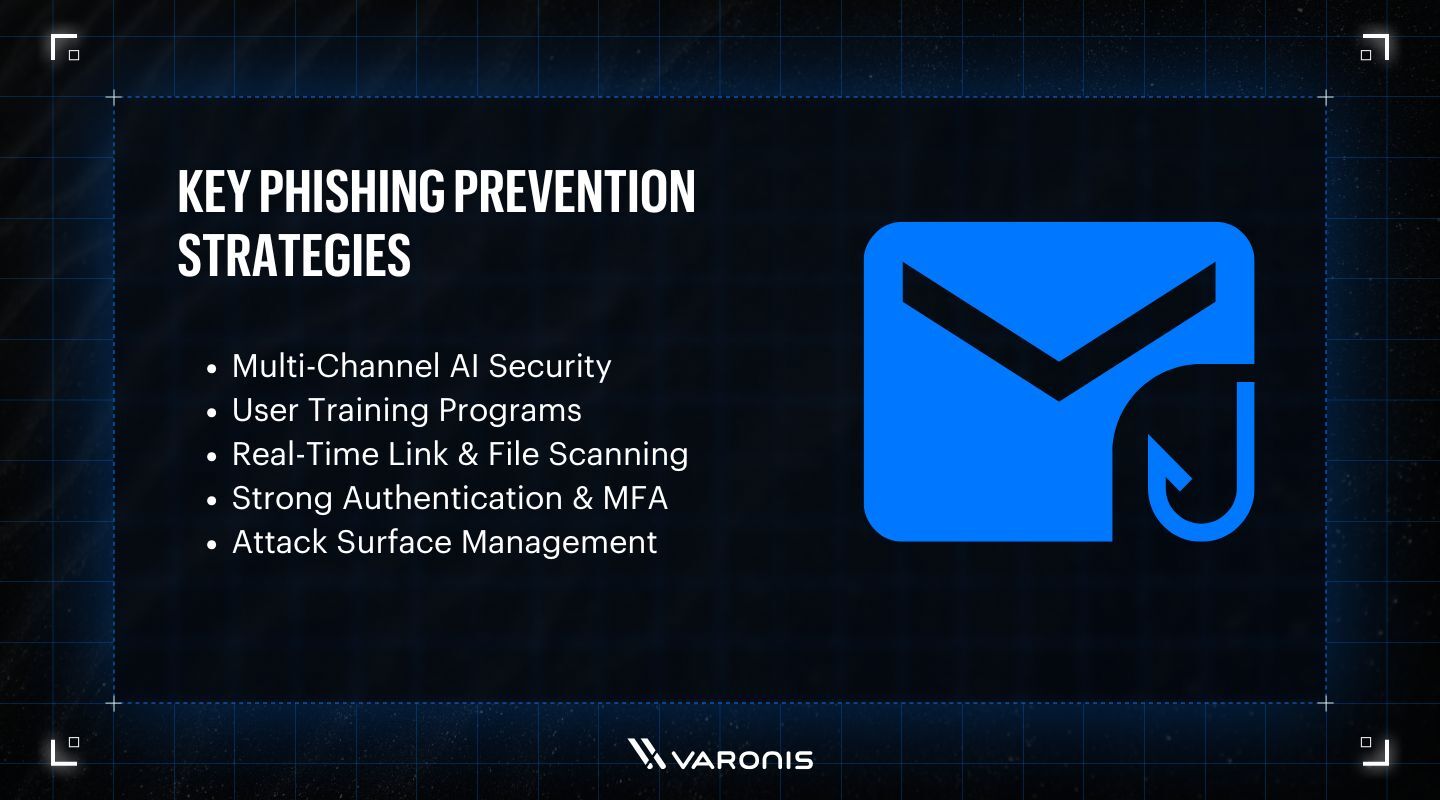
Key phishing prevention strategies
Hypothetical examples
To illustrate modern phishing, consider these scenarios:
Executive impersonation via vishing: An attacker uses voice-cloning technology to call a finance department employee pretending to be the company CFO. The caller sounds remarkably convincing and urgently claims that a major client payment must be processed immediately. They ask the employee to bypass regular controls. The employee, convinced by the realistic voice and seemingly authentic request, processes the transfer—falling victim to a sophisticated vishing attack.
We recently simulated a few vishing attacks on RSAC attendees and found that many had trouble discerning a real voice from an AI voice clone.
A nurse receives an SMS purportedly from the IT department. The message warns of a critical security update required for access to patient records. The message contains a link that leads to a convincing replica of the hospital's login portal. Trusting the message, the nurse enters her credentials. Attackers immediately harvest these credentials, potentially enabling additional intrusions into sensitive systems.
In both instances, attackers exploit human trust and believable technology, bypassing simple technical safeguards. The implications can include financial loss, legal exposure, reputational damage, and regulatory consequences.
Outsmart Phishing with Varonis Interceptor
Phishing attacks have diversified and grown more persistent. They use everything from social engineering and obfuscation to automation and AI-based voice or video impersonation. Combating these threats effectively calls for an organization-wide commitment to multi-channel security, advanced threat detection, and continuous education. Varonis Interceptor gives your organization safe from modern phishing threats with:
- Multi-Channel protection beyond the inbox: Interceptor Browser Security keeps users protected from phishing-sites in real-time, blocking malicious sites regardless of where the link originates.
- Proactive Domain Analysis: Varonis Interceptor’s phishing sandbox proactively scans newly registered domains and published URLs and analyzes them from top-to-bottom to uncover any potential phishing attempt.
- Multimodal AI-Powered Defense: Varonis Interceptor’s vision, language and behavior models detect subtle signs of deception in email design, linguistic patterns of users, and communication histories between users to ensure strong protection and minimize false-positives.
Phishing attacks are evolving, but Varonis Interceptor offers AI-native email security with the best detection rates on the planet, ensuring your environment is secured across every digital touchpoint.
Ready to keep your organization’s inboxes safe? See Varonis Interceptor in action.
Phishing attack FAQs
What is phishing?
Phishing is a type of cyberattack where attackers deceive individuals into revealing sensitive information. This includes passwords, credentials, or financial details by impersonating trusted organizations or individuals. Attackers often use emails, messages, calls, or fraudulent websites. The goal is usually to steal data, compromise accounts, or facilitate other malicious activities.
What are 5 key signs of phishing?
- Urgent or threatening language: Messages that pressure you to act quickly, such as warnings about account suspensions or security breaches.
- Suspicious links or attachments: Unexpected links or files, especially from unknown senders, often containing malware or leading to fake login pages.
- Unusual sender addresses: Emails or messages from addresses that don't match the claimed organization or display slight misspellings.
- Requests for sensitive information: Demands for passwords, multi-factor codes, or personal data that legitimate organizations typically wouldn't request via email or text.
- Poor grammar or formatting: Messages full of spelling mistakes, awkward phrasing, or off-brand formatting—which may indicate malicious intent.
How do I know if I have been phished?
You may have been phished if you entered sensitive information after clicking a suspicious link. This includes login credentials or credit card numbers after responding to calls or messages requesting confidential data. Signs of compromise include unexpected account activity, password change notifications you didn't initiate, or being locked out of your accounts. If you suspect you've been phished, change your passwords immediately and contact your IT or security team.
Can you get phished by opening an email?
Simply opening an email doesn't result in being phished in most cases, especially with modern email clients that block most automatic content. However, you can be phished if you click on malicious links, open infected attachments, or respond with sensitive information. It's always safest not to interact with suspicious emails beyond reporting or deleting them.



-1.png)