As organizations move faster to integrate AI, datasets are connected to models, agents, and analytics pipelines based on their metadata and lineage. But pressing questions often go unanswered: what’s sensitive, and who has access to it?
Successful AI initiatives depend on trusted data that teams can find, understand, and use safely. That’s why Varonis now integrates with Collibra to bring continuously updated sensitive data context directly into Collibra’s data catalog.
Collibra provides unified governance across data and AI, while Varonis identifies sensitive and regulated information across the data estate. Together, the integration helps organizations make better-informed decisions about which data to use for analytics, data science, and AI and agent development.
Add sensitive data context to Collibra
Collibra helps organizations discover data, understand its meaning and lineage, establish ownership and policies, and connect trusted datasets to business and AI use cases.
The Varonis integration enriches Collibra catalog assets with classification insights that identify sensitive and regulated data. Users can review this sensitivity context alongside metadata, ownership, lineage, policies, and other governance information available in Collibra.
With this additional context, data consumers, governance teams, and security teams gain a more complete understanding of the information they are evaluating, making it easier to govern sensitive data, comply with regulations, and maintain privacy.
Identify sensitive and regulated data
Varonis surfaces classifications for information, such as personally identifiable information, protected health information, financial information, credentials, secrets, and regulated data, within Collibra governance workflows.
Varonis AI classification combines content understanding with business context, permissions intelligence, activity data, and explainable reasoning to identify what data is, why it matters, who it relates to, and the risk it creates. These insights can support security, governance, exposure analysis, threat detection, and automated remediation across the Varonis platform.
Varonis classifies data sensitivity and sends the results directly to the Collibra data catalog.
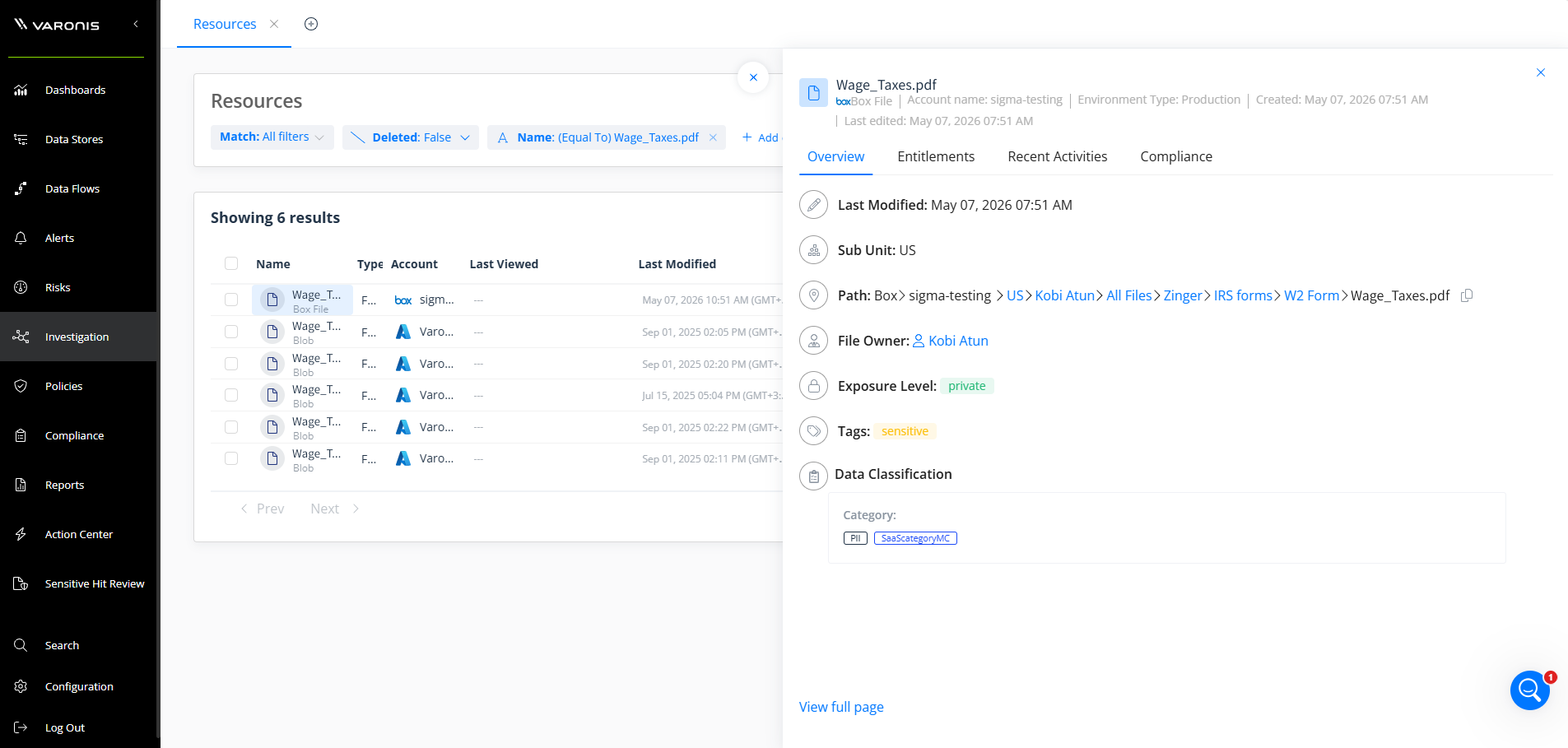
Varonis classifies data sensitivity and sends the results directly to the Collibra data catalog.
Make better-informed decisions about data and AI
Data users — from analysts to data scientists and AI engineers — can see what is sensitive directly within Collibra and use that context to make better decisions about which data is safe and appropriate to use.
For example, teams can more effectively evaluate:
-
Which datasets should be made available to marketing teams for campaign analysis.
-
Whether customer data is appropriate for training or grounding a customer-facing AI application.
-
Where data scientists can find governed data for analytics and model development.
-
How regulated or sensitive information relates to internal policies and compliance requirements.
Build trusted AI on governed data
AI can only be trusted when organizations understand the data that powers it. Connecting Varonis classification with Collibra governance helps teams find appropriate data, identify sensitive information, and make informed decisions before that data is used for analytics or AI.
With Varonis and Collibra, organizations can bring security and governance context together to accelerate data and AI initiatives without losing visibility or control.