As the leading international standard for information security management, organizations around the world rely on ISO 27001. While the standard defines what good security looks like, many organizations struggle to put it into practice, especially when sensitive data is spread across cloud, SaaS, email, and on-prem environments.
Organizations need to understand what ISO 27001requires, how compliance is achieved in practice, and how those requirements can be operationalized across modern, data driven environments.
What is ISO 27001?
At its core, the standard formally known as ISO/IEC 27001:2002, focuses primarily on the implementation and management of an information security management system (ISMS). An ISMS is comprised of the policies, procedures, people, documentation, and controls intended to maintain an organization’s information based on three foundational principles:
- Confidentiality – Ensuring only authorized users can access data
- Integrity – Maintaining the accuracy and trustworthiness of information
- Availability – Ensuring data is accessible when needed
A joint product of the International Standards Organization (ISO) and the International Electrotechnical Commission (IEC), ISO 27001 is the most well-known of more than a dozen published standards in the ISO/IEC 27000 family. It is the only standard in the ISO/IEC 27000 family against which organizations can be certified.
Unlike other standards and frameworks, achieving and demonstrating ISO 27001 compliance does not require strict adherence to specific technical controls. Instead, the focus is on risk management and taking a holistic and proactive approach to security across the entire organization. ISO 27001 provides a risk based framework that allows organizations to apply an appropriate subset of these controls based on the unique risks to their business operations, and can be adapted to their size, industry, and threat landscape.
Mandatory ISO 27001 clauses
While ISO/IEC 27001 allows organizations flexibility in how they select and apply security controls, Clauses four through ten define the mandatory requirements of the standard. These clauses establish what an organization must define, implement, operate, evaluate, and continually improve to run an effective ISMS. All seven clauses must be satisfied to achieve and maintain ISO/IEC 27001 certification.
Together, these requirements reflect a modern, risk-based approach to information security management. The standard emphasizes continuous risk assessment, accountability, and measurable outcomes, rather than prescriptive technologies or checklist-driven compliance. Annex A supports these clauses with a streamlined set of 93 controls, categorized across Organizational, People, Physical, Technological domains. These four clear themes enable organizations to address today’s security risks in a consistent, auditable way that is easier to map to real controls.
The result is a management system that emphasizes continuous risk management, accountability, and measurable security outcomes—not checkbox compliance.
Is ISO 27001 compliance or certification mandatory?
While some conflate ISO 27001 compliance with legal requirements, only a few countries legally require organizations to implement the framework. However, there are many instances that may require organizations to have an ISO 27001 certification. Contracts and vendor procurement policies often require ISO 27001 compliance, especially in sensitive industries like healthcare and finance. There are also market sectors where ISO 27001 certification is generally expected, even if not formally required.
How to become ISO 27001 certified
Becoming ISO 27001 certified is a structured process designed to validate that an organization has implemented an effective Information Security Management System (ISMS) and can manage information security risk on an ongoing basis. Certification is granted by an accredited third‑party certification body through a formal audit process, during which assessors evaluate whether the organization has implemented the requirements of the ISO/IEC 27001 standard and can demonstrate that those practices operate effectively in practice.
Because ISO/IEC 27001 is a risk‑based framework, rather than a prescriptive set of technical controls, there is no universal “ISO 27001 compliance checklist” that guarantees certification. Each organization determines how the standard applies to its environment, data, and risk profile, and auditors exercise professional judgment when assessing whether controls are appropriate, implemented, and effective.
As a result, achieving certification is less about checking boxes and more about following a defined path—from establishing an ISMS and managing risk, to undergoing independent audits that validate how those practices work in the real world. The certification journey follows a set of recognized stages that organizations move through as they prepare for, achieve, and maintain ISO/IEC 27001 certification.
Establish and operate an ISMS
Before certification can begin, an organization must design and operate an Information Security Management System (ISMS) in accordance with ISO/IEC 27001:2022. This starts with defining the scope of the ISMS and identifying which systems, data, and processes are in scope for certification. Organizations then identify and assess information security risks, select and document applicable Annex A controls, and implement the necessary technical and operational measures. Internal audits and management reviews are conducted to confirm the ISMS is functioning as intended.
Stage 1 Audit (Readiness Review)
Once the ISMS is in place, an accredited certification body performs a Stage 1 audit, focused on determining readiness for certification. The auditor reviews ISMS documentation, confirms the defined scope, evaluates the risk assessment and treatment approach, and examines the Statement of Applicability. Evidence of leadership commitment and governance is also assessed.
The goal of this stage is to confirm the organization is prepared for the more detailed Stage 2 audit and to identify any gaps that must be addressed before moving forward.
Stage 2 Audit (Certification Audit)
The Stage 2 audit is the formal certification audit and evaluates how the ISMS operates in practice. Auditors verify that controls are implemented as documented, risk treatment actions are effective, and security processes are followed consistently across the organization. They also assess whether evidence supports ongoing monitoring and risk management.
If nonconformities are identified, corrective actions must be completed and verified before certification can be granted.
Certification issuance
After successful completion of the Stage 2 audit and resolution of any findings, the certification body issues an ISO/IEC 27001 certificate. The certificate is typically valid for three years, subject to ongoing oversight.
Surveillance audits and recertification
ISO/IEC 27001 certification is not a onetime achievement. Organizations must undergo annual surveillance audits to verify continued conformity and demonstrate ongoing risk management and improvement. At the end of the three-year certification cycle, a recertification audit is required to renew the certificate. Failure to maintain conformity can result in suspension or withdrawal of certification.
How Varonis can help with ISO 27001 compliance
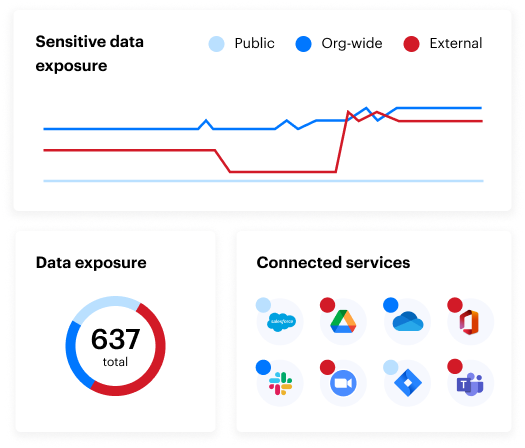
Identifying and addressing risks is at the heart of the ISO 27001 standard. Varonis helps make those requirements achievable—especially where data risk is highest.
Discover and classify sensitive data automatically
Many ISO 27001 controls depend on knowing where sensitive data lives. Varonis automatically discovers and classifies sensitive and regulated data across cloud, SaaS, email, and on-prem environments—providing the foundation for accurate risk assessments and audit readiness.
Enforce least privilege access at scale
Over permissioned access is one of the most common, and dangerous, security gaps. Varonis continuously analyzes access permissions, identifies excessive or risky access, and automatically enforces least privilege, reducing exposure without relying on manual reviews.
Reduce risk through automated remediation
ISO 27001 emphasizes proactive risk treatment, not just reporting. Varonis goes beyond visibility by automatically fixing risky conditions, including removing stale users and permissions, right-sizing access, and fixing misconfigurations.
Detect threats and suspicious behavior around data
Controls related to monitoring and incident response require proof that organizations can detect and respond to threats. Varonis uses behavioral analytics and AI driven detection to identify abnormal activity around sensitive data and alert security teams before breaches occur.
Simplify audits with control mapping and evidence
Preparing for an ISO 27001 audit often means gathering evidence from multiple systems. Varonis maps platform capabilities to ISO/IEC 27001:2022 controls and provides clear, defensible evidence, and reducing audit fatigue and accelerating certification and recertification efforts.
ISO 27001 Is about outcomes—not Jjust compliance
Achieving and managing compliance with ISO 27001 may seem like a daunting task, but in a world where customers, partners, and employees are increasingly concerned about their confidential data, it can be a substantial asset.
Organizations that succeed with ISO 27001 don’t treat it as a compliance checkbox. They use it as a framework to reduce data breach risk, strengthen trust with customers and partners, improve operational discipline, and support cloud and AI initiatives securely.
By protecting the data that matters most, Varonis helps organizations turn ISO 27001 from a framework into reality.


-1.png)